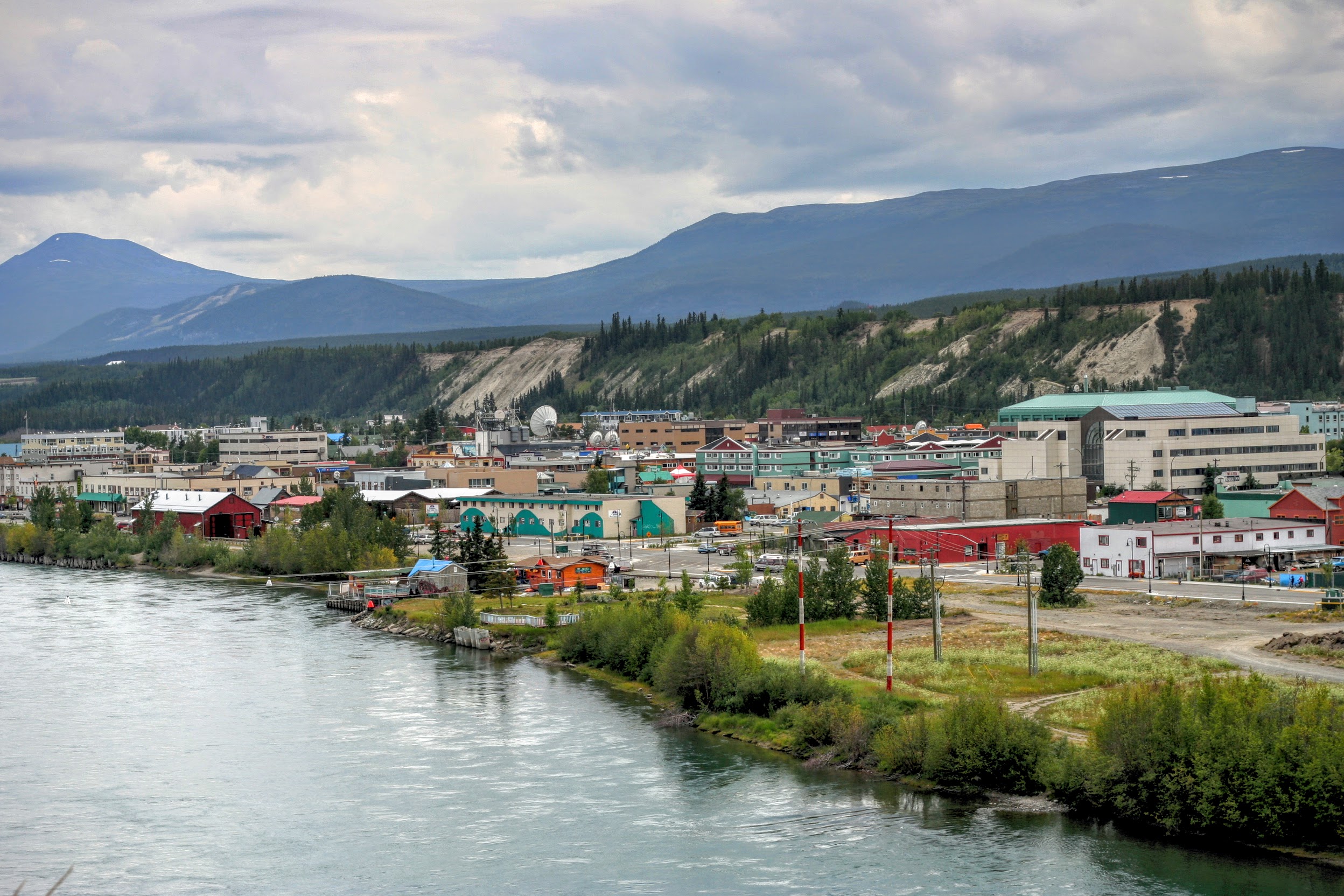
Whitehorse lives with the Yukon River in ordinary directions: downtown, then along the Millennium Trail toward the fish ladder, then farther to Miles Canyon where basalt walls pinch turquoise water under an 85-foot suspension bridge. Travel Yukon still notes the First Nations place-name Kwanlin for running water through canyon, a reminder that the gorge was a corridor long before it became a weekend hike with bear spray in the pack. Alaska Highway access and Chadburn Lake Road keep the canyon reachable when seasons change the parking map and the south-side road closes for winter.
Indoor recreation concentrates at the Canada Games Centre, the multi-use facility residents shorten to CGC, with the Whitehorse Lions Aquatic Centre for swim days and companion city venues at Takhini Arena and Mount McIntyre Recreation Centre. Drop-in swim, track, and fitness classes fill the dark months; summer evenings migrate to Fridays in the Park at places like Morely & Peel Park and Logan Park. Engage Whitehorse and FireSmart sit on the municipal homepage the way engagement and wildfire readiness do in a northern capital: practical icons beside transit and waste links, not tourism garnish.
Yukon News headlines lately braid land-use and mining talk into Official Community Plan arguments, beside traffic-calming updates from city hall. That mix is Whitehorse: canyon light on the Yukon River, a games-centre calendar for the long winter, and civic debate that treats the OCP as living paperwork rather than abstract planning jargon. The hometown profile stays outdoors-first, river-named, and unmistakably northern in every season.