Water System of the Month · August 2026
Guelph drinking water: water system of the month (august 2026)
Guelph's groundwater system scores B on OpenStats with 460 mg/L hardness (#1 among 29 direct-tier cities). Supply, treatment, and what's measured vs estimated.
· OpenStats data desk · Editorial standards
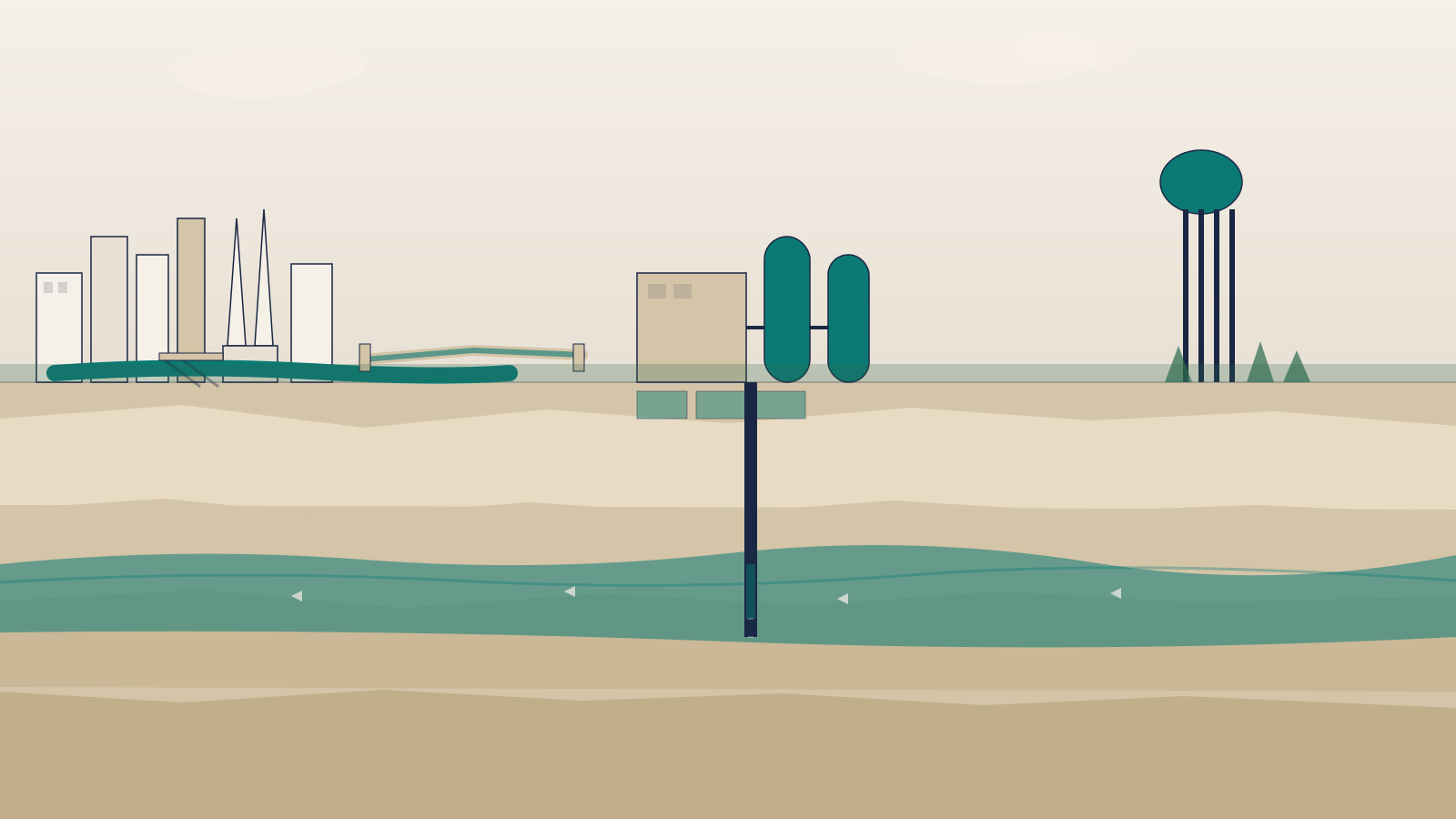
Guelph is the August 2026 Water System of the Month on OpenStats. Below: how we grade the system, what the chemistry row says, where supply and treatment data come from, and which numbers are measured versus estimated.
Compare Guelph vs Toronto on the city board →
Why this system matters
Guelph runs one of Canada's most distinctive municipal drinking-water systems — the country's largest city on almost pure groundwater, with seasonal Eramosa River water feeding infiltration ponds at the Arkell Spring Grounds rather than the tap directly.
On the OpenStats water atlas Guelph carries a direct-tier hardness reading and a B (Good) grade. Among 29 direct-tier cities it ranks #1 for hardness at 460 mg/L (very hard). The Ontario average across tracked municipalities is about 182 mg/L.
Supply and treatment
Source type on the atlas: groundwater. Named source waters include Deep limestone/dolomite bedrock aquifers; Arkell Spring Grounds / Glen Collector (shallow groundwater); Eramosa River (seasonal infiltration recharge only).
Treatment assets named in OpenStats supply research: F.M. Woods Water Treatment Plant (Primary plant receiving Arkell wells and Glen Collector water via the Arkell Aqueduct; supplies a large share of Zone 1 demand.); Distributed well treatment and point-of-entry facilities (About 19–22 operational municipal wells citywide plus the Glen Collector; treatment typically includes chlorination and, at selected sites, UV, iron sequestration, or manganese removal. Some sources are classified GUDI-WEF.).
City-owned system with a 6.5 km large-diameter aqueduct, five underground reservoirs, three water towers, and roughly 560 km of watermains across three pressure zones.
OpenStats score and ranking context
OpenStats grades drinking water A through D using Health Canada guideline limits on pH, lead, fluoride, chlorine, and turbidity, with a B grade when health parameters comply but hardness exceeds 180 mg/L or turbidity sits above the typical 1 NTU target. Guelph scores B on the current row: Good.
Hardness 460 mg/L as CaCO₃ is from a published municipal source (2015). That figure is 278 mg/L above the Ontario average (182 mg/L across 51 tracked municipalities).
Compare neighbours on the water atlas hardness sort, the hub hardness guide, and the Guelph hometown page for City Score context.
What is measured vs estimated
Every parameter row carries a provenance label. Hardness on direct-tier cities comes from a cited municipal or regional report. pH counts as measured only when the same verified source published it. Lead, fluoride, chlorine, and turbidity on this page remain atlas seed values unless data_source names a municipal lab report.
For Guelph, hardness is verified from the Region of Waterloo / City of Guelph water softener study (2015). pH 7.2 is an atlas seed value, not quoted from that study. Other health parameters in the table below are seed rows — not a current compliance certificate.
For operational compliance data, open the City of Guelph annual water services reports linked in the supply profile.
For reporters
Share URL for this edition: https://openstats.ca/news/water-system-of-month/guelph-on-2026-08/
Water atlas city page: https://water.openstats.ca/water/guelph-on/
Hometown arena card: https://openstats.ca/cities/guelph-on/
OpenStats data desk · [email protected]
Parameter table
| Parameter | Value | Guideline | Status | Provenance |
|---|---|---|---|---|
| Hardness | 460 mg/L | No MAC (aesthetic) | Very hard | Measured |
| pH | 7.2 | 6.5–8.5 | Compliant | Estimated |
| Lead | 0.1 μg/L | ≤ 5 μg/L | Compliant | Measured |
| Fluoride | 0.6 mg/L | ≤ 1.5 mg/L | Compliant | Measured |
| Chlorine | 0.6 mg/L | ≤ 4 mg/L | Compliant | Measured |
| Turbidity | 1 NTU | ≤ 1 NTU (typical) | Compliant | Measured |
Provenance notes: Hardness: Region of Waterloo / City of Guelph water softener study (2015) · pH: Atlas seed row · Lead: Region of Waterloo / City of Guelph water softener study · Fluoride: Region of Waterloo / City of Guelph water softener study · Chlorine: Region of Waterloo / City of Guelph water softener study · Turbidity: Region of Waterloo / City of Guelph water softener study
Map and atlas links
Open the water atlas page for Guelph for the full grade gauge, provincial comparison bars, and supply narrative. The hometown arena card lives on Guelph's OpenStats city page.
Map data © OpenStreetMap contributors. Utility service area may extend beyond the marker.
Public sources cited
- City of Guelph — Groundwater / water supply
- City of Guelph — 2025 Water Services Summary Report
- City of Guelph — One Water Plan Technical Memo 1 (2026)
Reporter share URL
https://openstats.ca/news/water-system-of-month/guelph-on-2026-08/
Questions: [email protected]